| Summary: |
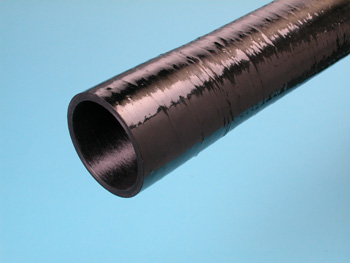
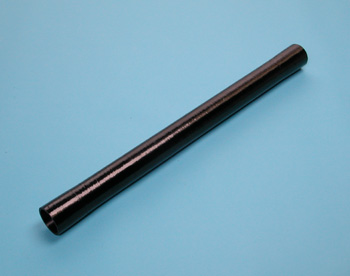
Composite drive shaft produced from joining technology
combined with optimized fiber winding lay-up pattern that is crashable
along the longitudinal axis. Weight
savings: 40-50% compared to 3 joint steel drive shaft. |
| Most Innovative Feature: |
Composite-steel yoke Joining technology combined with
optimized fiber winding lay-up pattern which makes composite drive shaft
crashable along the longitudinal axis. |
| Other Innovative Features: |
Weight reduction, Reduction in NVH. |
| What Forming Process? |
Filament Winding. |
| First Time Process Used: |
No. Process itself for making a tube is common. |
| Previous Process: |
Material : Carbon Fiber, Epoxy, Process : Filament Winding
or Pull Winding for making a composite tube. |
| Tooling Innovations: |
No special tooling innovations are required to make a
composite tube. |
| New Material Developments: |
Carbon Fiber "TORAYCA T700S" families having
slightly higher Young's Modulus than standard modulus fiber has been
developed. |
| Weight Savings: |
Approximately 40- 50% compared with 3 joint steel drive
shaft. |
| Cost Savings: |
N/A. |
| Cost Avoidance: |
N/A. |
| Direct Consumer Benefit: |
Weight saving, Reduced NVH, Crashworthiness in axial
direction (safety). |
| Translates to Other Vehicles?: |
Yes. It has already been applied to Mitsubishi Montero and
Mazda RX-8 in addition to Nissan 350Z. |
| Safety Benefits: |
Significantly reduce peak load during head collision of a
vehicle. |
| Environmental Benefits: |
N/A. |
| Additional Comments: |
No concern about durability because NO ADHESIVE is used for
the joining technology. Completely mechanically jointed. Patent protected
in US, Europe and Japan. |